

Modern Breakfast Nook Ideas for Stylish Homes
The forgotten corner of the kitchen used to be a breakfast nook, a little table shoved against a wall, utilized more out of need than choice. That idea has quietly gone by the wayside. In today’s houses, this little pocket of space has become one of the most beloved spaces in the house, where the first cup of coffee is poured, kids complete breakfast before school, and brief discussions happen before everyone leaves for the day. With open-plan kitchens the norm, a well-planned breakfast nook lends a sense of structure and warmth to a space that can otherwise feel too huge or too busy. In this blog we walk you through some of the most practical and good-looking breakfast nook ideas for 2026, the design choices that actually make a nook feel modern, the mistakes most homeowners make while planning one, and how working with an experienced team like SKF Contractor can turn a rough idea into a space your family actually enjoys using every morning.
Summary :-
Modern breakfast nooks have become a popular feature in stylish homes, offering a cozy space for dining, working, and relaxing. From space-saving layouts and built-in seating to smart lighting and storage solutions, a well-designed nook adds both functionality and charm. This guide covers practical breakfast nook ideas, key design elements, common mistakes to avoid, and expert insights from SKF Contractor.
In This Article:-
What Is a Breakfast Nook, and Why It Still Matters
A breakfast nook is a specific eating space, typically near a window or in a corner of the kitchen, apart from the main dining room. Traditionally, it was tiny and informal, for short lunches rather than formal banquets. What has changed is the way homeowners actually use it. Families now use the nook as a flexible space for breakfast on busy weekdays, a homework table in the afternoon, and a quiet area for a laptop or a book once the evening slows down. Breakfast nooks are frequently located near natural light, and they often have views of a garden or street, so they tend to seem more intimate than the rest of the kitchen, which is precisely why so many homeowners want them to look intentional, not like extra space.
Why Modern Breakfast Nooks Are Trending Right Now
A few changes in the way people live explain the popularity of breakfast nooks among homeowners and designers. As more people work from home, they use kitchens for more than just cooking. The nook is quietly taking on that job for daily meals, as smaller homes and apartment life have also driven formal dining rooms out of many floor plans. Social media has played a role, too—well-styled nook pictures nicely and has gone from something homeowners “just don’t think about” to a deliberately planned section of the home. Plus, builders and renovators have learned that purchasers like to see a defined, intimate breakfast area while touring a property, making it a smart addition even from a resale perspective.
Key Design Elements of a Stylish Breakfast Nook
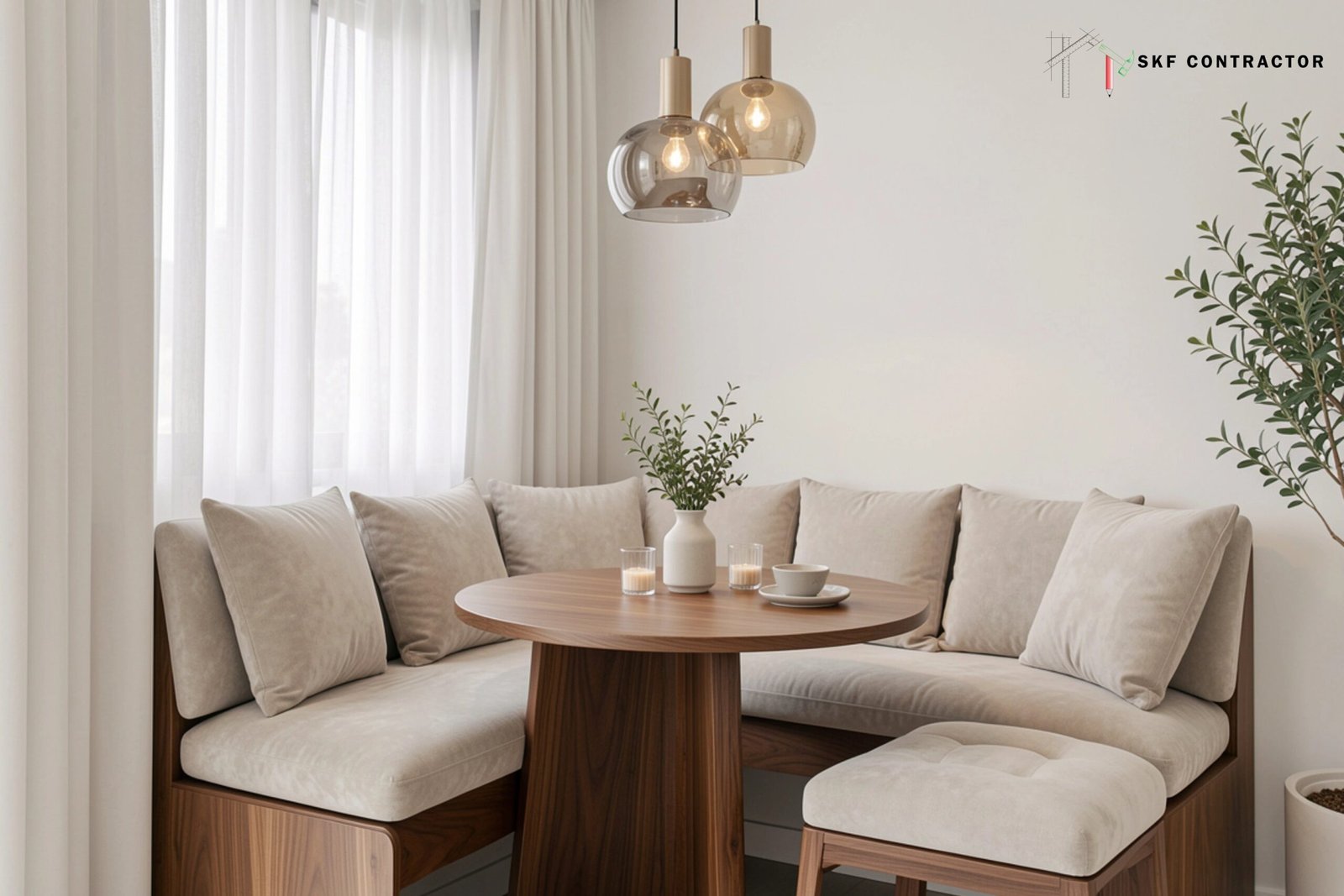
A nook begins to feel modern when a handful of features come together, rather than remaining isolated. First, it’s all about the seating. A cushioned bench is more modern and softer than four similar chairs, especially if you include one or two accent chairs for contrast. The design of the table is more important than people think. Round and oval tables are preferable for nooks to rectangular ones because they don’t cage anyone in a corner. Texture prevents the area from being flat, so a mix of linen cushions, a woven pendant shade, and a wood or stone tabletop is usually better than an all-smooth, all-matching set. The unsung hero of a successful nook is storage: bench seats that pull up or drawers built into the base keep the space neat without adding obvious cabinets nearby. These parts don’t have to be expensive, but they must work together and not seem randomly chosen.
Modern Breakfast Nook Ideas for Small Kitchens
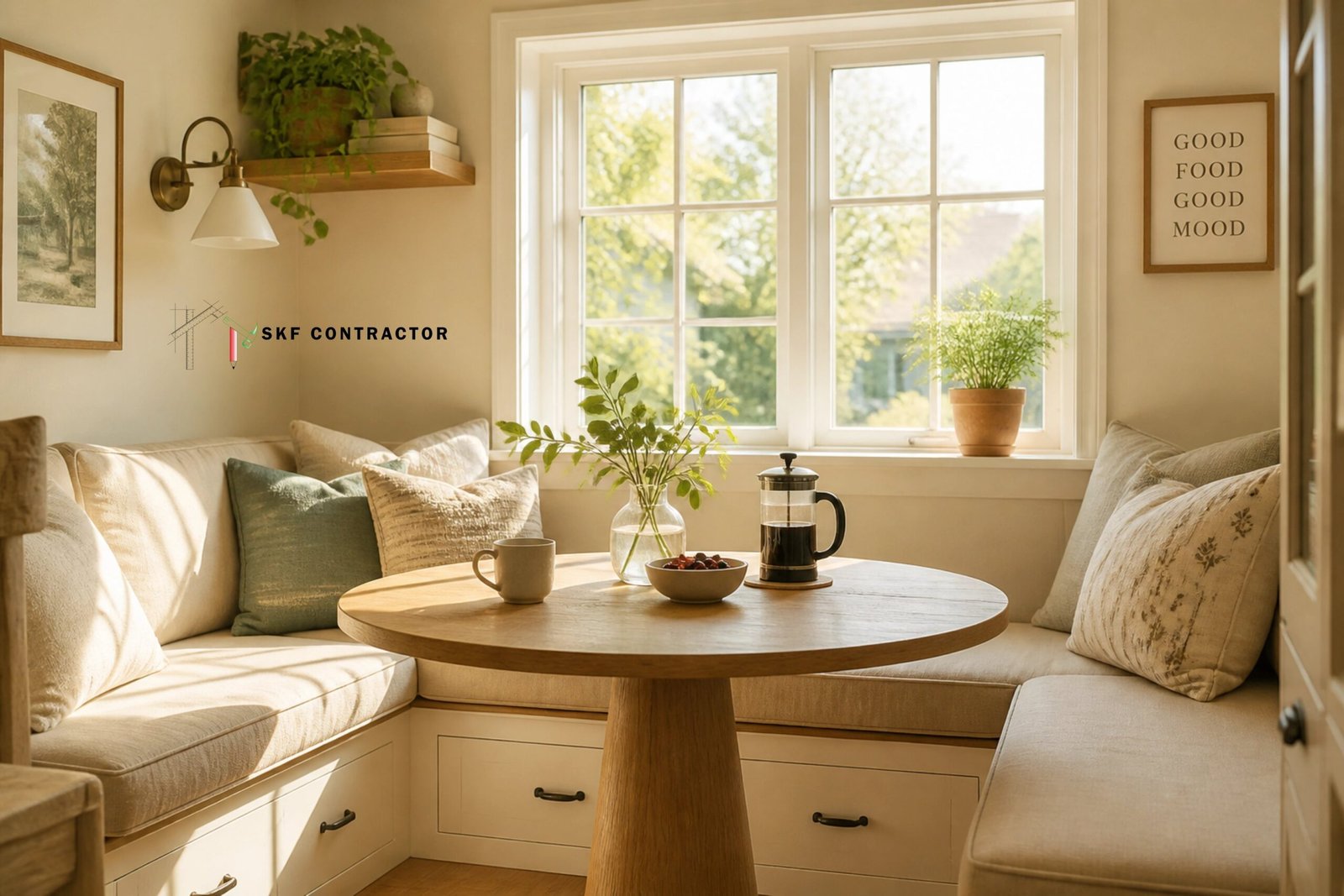
Many homeowners say they don’t think they can have a breakfast nook because they lack the square footage, yet this type of built-in solution generally works best in compact kitchens. The dead space is put to use with an L-shaped bench that hugs two walls, and when not in use, a drop-leaf or extendable table allows the space to condense. Install a thin shelf or a line of hooks above the bench to store daily-use goods out of sight and off the table without taking up floor space. Light colors on the walls and seating help a small nook feel spacious rather than caged in, and a mirror placed opposite the window can bounce additional daylight into the corner. A kitchen that really has no room for a table can nonetheless have a nook sitting on a wide windowsill with a fitted cushion.
Lighting Ideas That Make a Nook Feel Inviting
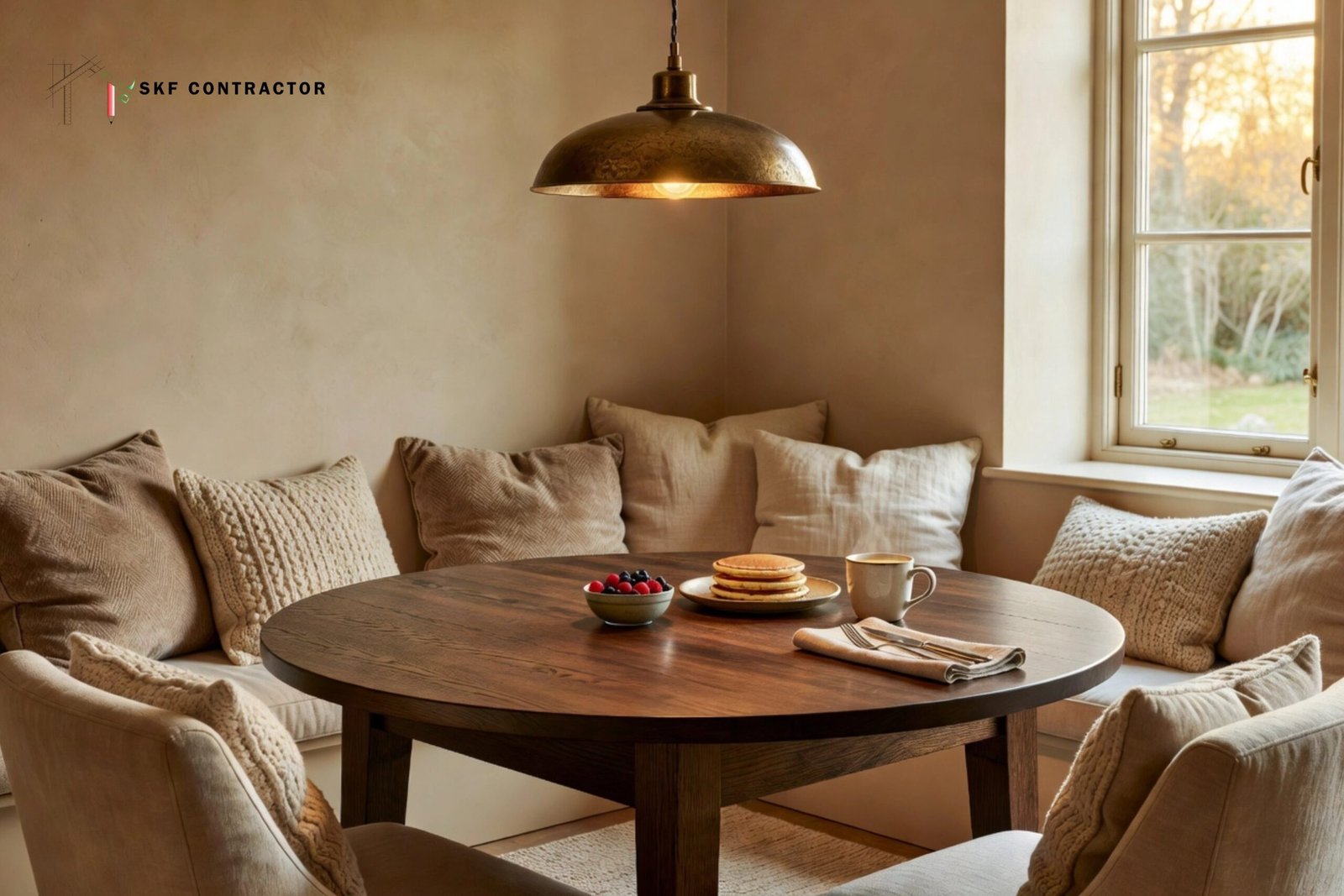
Lighting is what makes a breakfast nook feel comfortable and inviting, rather than just a place to eat. It’s also one of the least expensive upgrades with the most visual impact. The single statement pendant, hanging a little lower than normal, right over the table, makes the corner feel immediately planned, not incidental. Warm bulbs, typically around 2700K to 3000K, are significantly more appropriate for a breakfast nook than cool white light, which can feel more like office lighting. During the day, natural light still does most of the work, so transparent curtains or basic blinds that let the daylight in without glaring glare are usually a better choice than heavy drapes. In the evening, when the above pendant is turned off, a small bulb on a neighboring shelf or ledge becomes a gentler second light source.
Common Mistakes to Avoid While Designing a Breakfast Nook
-
Choosing a table too large for the space. A table that barely leaves room to walk around the bench makes the whole nook feel cramped rather than cozy.
-
Skipping storage during planning. Adding bench storage later is far more expensive and difficult than building it in from the start.
-
Picking light-colored cushions without checking durability. Breakfast spots see spills daily, so fabric that isn’t stain-resistant or washable tends to age badly within months.
-
Ignoring the lighting until the end. A pendant added as an afterthought rarely sits at the right height or matches the rest of the fixtures.
-
Matching every chair instead of mixing textures. An all-matching set can look stiff; one or two different chairs alongside a bench usually feels more current.
How SKF Contractor Can Help You
The issue for most homeowners in translating any of these ideas into a built space is that a breakfast nook touches on several trades at once—carpentry for the bench, electrical for lighting and outlets, sometimes plumbing if the nook is near a kitchen wall, and finishing to pull it all together. This is the kind of project that SKF Contractor handles from the planning stage onward, beginning with a proper site visit so they can understand the space available, light direction, and how the family actually expects to use the nook. The team then creates a layout, selects materials, and arranges seating that aligns with the budget while ensuring durability. Instead of involving different contractors, the carpentry, electrical, and finishing work are all managed under a single project. Therefore, schedules stay shorter, and there is one contact point throughout the process. What you get is a breakfast nook that is faithful to the original idea, not a diluted version of it.
Final Thoughts
A big or pricey breakfast nook isn’t necessary to really change the way your kitchen feels from day to day. A good table, soft lighting, a few carefully selected materials, and the perfect bench are generally all it takes to change an underutilized corner into the place where the family really likes to sit. If you’re planning on adding or redesigning a breakfast nook in your home, working with a team that understands the design and the construction side, like SKF Contractor, makes it much easier to get the layout, lighting, and finishes perfect the first time.
<<< Previous Blog
What is the ideal size for a breakfast nook?
The most comfortable nooks need at least 6- to 7-foot lengths and about 5-foot widths to accommodate a table, a bench, and enough space to walk around. Smaller corners can still work with a drop-leaf table or a single bench seat and two chairs.
Can a breakfast nook be added to a small kitchen?
Yes, this process is often easier than homeowners realize. Corner benches, fold-down tables, and cushioned window seats are all excellent for small kitchens, as they use vertical space and neglected corners rather than open floor space.
What is the best seating option for a modern breakfast nook?
A built-in bench, or banquette, is frequently seen as the most space-efficient and modern-looking choice, since it can be used for storage and accommodates more people than individual chairs within the same area.
How much does it cost to build a custom breakfast nook?
Costs can vary greatly depending on the materials, whether there’s built-in storage, and if electrical or lighting work is necessary. A simple table and chairs will cost a lot less than a fully custom banquette with built-in storage and bespoke cushions, so it’s advisable to acquire a price depending on the specific design.
What lighting works best above a breakfast nook?
Generally, a single pendant light with a warm-toned bulb, suspended about 28 to 32 inches above the table, works well. It should be sufficiently bright for the purposes of work but warm enough to feel relaxed rather than clinical.